What is an Exosomes?
Exosomes are tiny vesicles—too small to be seen with the naked eye, ranging from 30 to 150 nanometers in size—that are naturally produced and secreted by almost every cell type in the body, including stem cells. Playing a vital role in the body’s communication network, these vesicles act as messengers between cells. These can be likened to letters traveling between cells. They leave one cell, reach another, and deliver the message they carry. They perform important functions in regulating cell growth, gene expression (how genes operate), and immune responses.
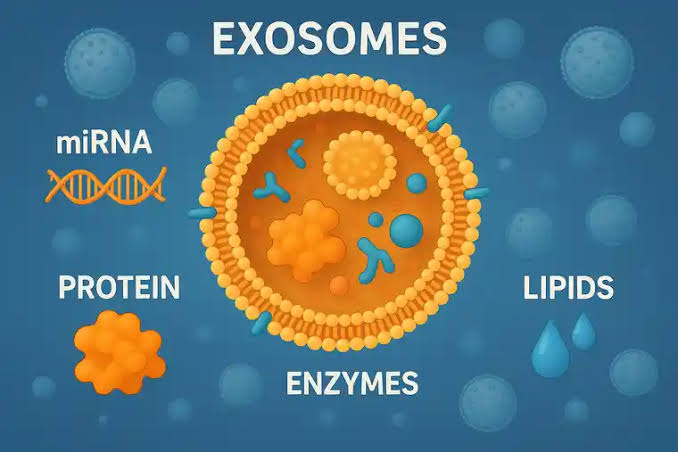
Exosomes are notable for their rich composition. Research shows that these tiny vesicles are packed with thousands of different proteins, hundreds of RNA types, and various lipid molecules. Scientists identify exosomes by examining the proteins on their surfaces, which function like ID cards.
These specific proteins determine which cells within the body the exosomes will target. For this reason, exosomes are often referred to as “smart cargo” that knows its destination.
Where Are Exosomes Found?
Exosomes are not static structures within the body. They are highly mobile.
They are found in high concentrations in:
Body Fluids:
They are present not only in blood but also in fluids such as urine, saliva, tears, breast milk, gastrointestinal secretions, and cerebrospinal fluid.
Intracellular and Extracellular Spaces:
After being produced by cells, they are secreted into the extracellular space and subsequently circulate within the spaces between cells and in body fluids.
Stem Cell Sources:
In regenerative medicine, the most valuable exosomes are those derived from mesenchymal stem cells (adult-type stem cells). These stem cells are found primarily in tissues such as bone marrow, adipose tissue, the umbilical cord, and the placenta.
📌 Important Note:
Stem cells are sources capable of differentiating into specific cell types when needed and initiating the body’s natural healing process.
Formation of Exosomes
Exosomes are small, membrane-bound vesicles naturally produced by cells.
The formation process can be summarized simply as follows:
Initiation of Formation:
Small sacs are generated through budding from within the cell.
Formation of Endosomes:
These sacs develop into structures known as endosomes within the cell.
Exosome Development:
Numerous intraluminal vesicles are formed through the inward budding of the endosome’s inner membrane.
Multivesicular Body:
A structure containing these intraluminal vesicles is formed.
Release İnto The Extracellular Space:
The multivesicular body fuses with the cell membrane, releasing the vesicles within it into the external environment. These released vesicles are called exosomes.
Mediating Communication:
Proteins, lipids, and various types of RNA contained within exosomes can be taken up by other cells and play an active role in intercellular communication.
Why Are Exosomes Preferred?
Exosomes are biological vesicles produced by cells.
They are not living entities.
Researchers frequently turn to exosomes to harness the healing power of stem cells while avoiding the risks associated with live cell transplantation.
Key reasons for this preference include:
Reduced Risk of Immune Rejection:
The body’s immune system may identify and reject live cells introduced from an external source as foreign. Exosomes, however, have the potential to elicit a weaker immune response and are less likely to be perceived as a threat by the body, thereby minimizing the risk of treatment rejection.
Access to Hard-to-Reach Areas:
Certain protected regions within the body are difficult for drugs or large cells to access. The blood-brain barrier, which protects the brain, is one such obstacle. Thanks to their small size, exosomes can cross this barrier. This capability makes them subjects of study as drug delivery vehicles for treating neurological conditions like Alzheimer’s disease.
Targeted Therapy:
Because exosomes retain the characteristics of their parent cells, they act like “smart cargo” capable of navigating the body. They target damaged areas and deliver their therapeutic contents directly to the site of injury.
Vascular Safety:
Since stem cells are larger than exosomes, their intravenous administration carries a risk of accumulation and blockage in capillaries. Exosomes, due to their smaller size, significantly reduce this risk.
Ease of Storage and Transport:
Keeping live stem cells viable during storage and transport is challenging and requires specific handling precautions. In contrast, exosomes can be more easily stored and transported by freezing or lyophilizing (removing the water) them.
Mechanism of Action of Exosome Therapy:
Exosome therapy utilizes the body’s natural communication system to transmit healing instructions to damaged cells.
Target Cell Recognition and Targeting:
Exosomes are not randomly circulating structures.
They recognize their targets through molecules on their surfaces.
Cell Entry and Cargo Transfer:
Upon reaching the target cell, they bind to the cell membrane and release their contents into the cell.
Genetic Reprogramming:
The effect of exosomes stems from the various substances they carry, including proteins, lipids, growth factors, and genetic materials. Through these contents, they can influence the target cell’s genetic processes—for instance, by delivering genetic instructions to halt inflammation.
Applications of Exosome Therapy:
- Acute Lung Injury
- Graft-versus-Host Disease
- Hair Loss
- Spinal Cord Injury
- Duchenne Muscular Dystrophy
- T and B Cell Regulation
- Wound Healing
- Photo-aging
- Atopic Dermatitis
- Skin Rejuvenation
- Osteoarthritis
- Spot Treatment
- Muscle and Tendon Injury
- Ligament Injury
- Bone Healing
- Joint Calcification (Osteoarthritis)
- Cartilage Damage
- Blemish/Spot Treatment
In Which Areas Is Exosome Therapy Used?
-
Exosome Application for Skin Damage (Dermocosmetics)
Issues such as scar formation, pigmentation, photo-aging, and skin aging result from biological changes within the skin. Mesenchymal stem cell-derived exosomes are used to address these types of skin problems. They contribute to the healing of scar tissue and help restore the skin’s elasticity and strength. Additionally, they revitalize cellular characteristics lost due to aging.
-
Exosome Application for Hair Loss
Various interventions exist for hair loss, a condition commonly seen in both men and women. Most methods involve chemical drugs and may cause side effects. However, stem cell-derived exosomes can slow or prevent hair loss by stimulating dormant hair follicles without causing side effects. Exosomes support hair growth by triggering the hair follicles to enter the growth phase.
-
Exosome Application for Graft-versus-Host Disease (GvHD)
GvHD, which can occur as an immune response following tissue, cell, or organ transplantation, may lead to symptoms such as dry eyes. Stem cell-derived exosomes have been reported to mitigate these effects and are used prophylactically in the treatment of GvHD.
-
Exosome Application for Ovarian Rejuvenation
Premature ovarian aging has become a common condition. It can result from stress, autoimmune diseases, or chemotherapy. Exosomes, administered in conjunction with cellular therapies and produced under cGMP conditions, have yielded positive results. It is used in the treatment of polycystic ovaries, ovarian development issues, and uterine disorders.
-
Exosome Application in Male Infertility
Exosomes can reduce reactive oxygen species and their adverse effects on sperm. They hold the potential to enhance sperm quality and improve spermatogenesis. They can be used as an adjunct in IVF treatment and may be effective in mitigating damage caused by testicular torsion. By promoting the proliferation of spermatogenic cells, they can inhibit apoptotic processes and contribute to the recovery of germinal tubules and the spermatogenic process.
-
Exosome Application in Spinal Cord Injuries
Studies have demonstrated the beneficial effects of stem cell-derived exosomes on spinal cord injuries.
Stem Cell-Derived Exosomes:
- Mitigate histopathological damage by accelerating motor function recovery and supporting neuronal regeneration.
- Suppress neuronal apoptosis and promote functional recovery.
- It may accelerate locomotor recovery by minimizing inflammation.
- It may improve functional recovery. And stimulate axonal regeneration.
- It may help alleviate conditions associated with spinal cord injury, thanks to its miRNA-21, miRNA-133b, and miRNA-126 content.
-
Exosome Application in Orthopedic Conditions
Cartilage Damage and Joint Degeneration (Osteoarthritis):
- Stem cell-derived exosomes promote the proliferation of cartilage cells by reducing inflammation.
- Successful outcomes have been reported in joint conditions such as osteoarthritis and talar lesions.
Bone Healing:
- Stem cell-derived exosomes facilitate faster healing of bone fractures.
- They can enhance the activity of osteoprogenitor cells and support bone tissue regeneration.
Muscle and Tendon Injuries:
- Stem cell-derived exosomes can accelerate the healing process of muscle and tendon injuries.
- They support the rapid regeneration of tendon cells by reducing inflammation in conditions such as tendinitis and tendinosis.
Ligament Injuries:
- Stem cell-derived exosomes can promote the regeneration of ligament tissue. – May support rapid recovery in sports injuries and other traumatic conditions.
-
Exosome Application in Intervertebral Disc Degeneration:
- Exosomes may alleviate the severity of intervertebral disc degeneration through their miR-410 content.
- They slow the progression of disc degeneration and may delay matrix degradation.
- They can regulate endoplasmic reticulum-associated apoptosis.
-
Exosome Application in Sports-Related Conditions:
Exosome applications can be effective in conditions such as:
- Athletic performance,
- Frozen shoulder,
- Immune regulation,
- Tendon injury,
- Cartilage injury,
- Muscle injury,
- Tendon-to-bone healing,
- Arthritis.
Anterior Cruciate Ligament (ACL) Reconstruction:
- Stem cell-derived exosomes may facilitate tendon-bone healing by regulating macrophage M1/M2 polarization.
Rotator Cuff Injuries:
- Exosomes promote rapid healing of tears and may reduce post-surgical re-tear rates.
Shoulder Stiffness:
- Exosomes may prevent the progression of adhesive capsulitis and reduce pain by suppressing TGFBT1 expression via miRNA-let-7a-5p.
Achilles Tendon Injury:
- Stem cell-derived exosomes may facilitate healing by influencing mechanisms that balance tendon matrix synthesis and degradation, and accelerate the process by suppressing inflammation.
-
Retinal Diseases and Exosome Use
Retinitis Pigmentosa
- May support the survival of retinal ganglion cells and axonal regrowth.
- May partially prevent axonal loss and functional impairments.
Optic Atrophy
- May promote axonal regrowth by secreting neuroprotective compounds.
- May protect retinal ganglion cells, enabling them to integrate into existing neural networks and re-establish neural connections.
Age-Related Macular Degeneration
- May preserve retinal structure by inhibiting the apoptosis of photoreceptor cells and may exert anti-inflammatory, neuroprotective, and anti-apoptotic effects.
-
Exosome Use in Parkinson’s Disease
- It could potentially reduce the death of dopaminergic neurons and might enhance the release of dopamine in the brain by crossing the blood-brain barrier.
- It may show neurorestorative and regenerative effects, particularly beneficial after an ischemic stroke.
- Additionally, it might offer therapeutic benefits in degenerative diseases by inhibiting cell apoptosis and encouraging cell proliferation and angiogenesis.
-
Exosome Use in Cardiovascular Diseases
Exosomes are utilized for their reparative properties in addressing health issues such as heart attacks and atherosclerosis.
Research is being conducted on stem cell-derived exosomes to promote the healing of damaged heart muscle tissue following a heart attack and to accelerate the formation of new blood vessels.
In the case of atherosclerosis, these structures may prove beneficial in reducing vascular damage and limiting plaque formation.
-
Use of Exosomes in Cancer Treatment
Exosomes, which are studied for both diagnostic and therapeutic purposes in oncology, serve as targeted carriers for chemotherapy drugs and genetic materials. They can be utilized in immune-based therapies and contribute to liquid biopsy methods.
-
Use of Exosomes in Diabetic Foot Treatment
They can aid in the healing of tissue damage by reducing inflammation. They can facilitate tissue repair by regulating M1/M2 macrophage polarization. By carrying miRNA-181c-5p, they can reduce neuropathic inflammation and alleviate neuropathic pain.
-
Use of Exosomes in Peripheral Neuropathy Treatment
They can increase nerve conduction velocity reduced by peripheral neuropathy. By increasing nerve fiber density and myelin thickness, they can reduce neurovascular dysfunction and support functional recovery.
-
Use of Exosomes in Lung Diseases
Idiopathic Pulmonary Fibrosis
- Stem cell-derived exosomes can alleviate respiratory distress.
- They can reduce alveolar damage and fibrotic scarring.
Chronic Obstructive Pulmonary Disease (COPD)
- They can alleviate shortness of breath associated with COPD.
- They can also reduce inflammation and damage resulting from cigarette smoke.
- Additionally, they offer protection against damage to the bronchial epithelium caused by toxic fumes.
How Is Exosome Therapy Administered?
There is currently no universally accepted, definitive standard protocol (such as a specific number of sessions or dosage) for exosome therapy.
Treatment plans are personalized based on:
- The type of condition,
- The patient’s age,
- and the extent of the damage.
For injection-based treatments—such as those for intra-articular issues or localized tissue damage—the general process follows these steps:
- A specialist physician evaluates the patient’s condition and assesses their suitability for the treatment.
- A personalized exosome solution is prepared.
The exosome product is stored under cold-chain conditions.
It is thawed before application and prepared under sterile conditions. - The solution is injected into the target area using a fine-gauge needle. Ultrasound guidance may be utilized in some cases.
- Following the procedure, the patient is kept under observation for approximately 10–15 minutes.If no complications arise, the patient is discharged and may resume daily activities on the same day.Anesthesia is generally not required for the procedure.
However, local anesthesia may be administered to enhance patient comfort.
In addition to this, scientific studies and clinical trials have identified other methods for administering exosomes into the body:
Intravenous:
Exosomes are administered into the bloodstream via the intravenous (IV) route.
This method is generally preferred when a systemic effect is required.
Intra-articular:
It is administered via direct intra-articular injection.
It is used in conditions such as osteoarthritis and during orthopedic procedures.
Subcutaneous Injection:
Administered just beneath the skin; this method is used in vaccine research and specific dermatological treatments.
Mesotherapy:
Low doses are injected into the middle layer of the skin using fine needles; it is commonly preferred for skin rejuvenation and hair treatments.
Microneedling:
Tiny channels are created on the skin’s surface to allow exosomes to reach deeper layers; it is a widely used method in aesthetic procedures.
Intranasal:
A needle-free method currently being developed for treating brain disorders.
Oral:
It is being investigated for use in intestinal diseases.
Special formulations are being developed to overcome biological challenges, such as degradation by stomach acid.
Although it is a convenient method in terms of patient comfort, it faces certain biological challenges, such as breakdown by stomach acid and digestive enzymes.
Intraperitoneal:
A method generally employed when higher doses need to be administered.
Duration and Session Scheduling for Exosome Treatment
There is currently no globally accepted standard protocol for exosome therapy. The process is tailored entirely to the individual’s specific condition and needs.
A typical treatment plan generally proceeds as follows:
Number of Sessions:
Three sessions are usually recommended to achieve noticeable results.
Session Intervals:
The first session takes place during the initial visit, the second at the one-month mark, and the third at the six-month mark.
Duration of Effects:
Patients generally begin to feel the effects within the first 1–2 weeks. However, it may take several weeks for the desired outcome to fully manifest. Individual differences play a significant role in this process.
The number of sessions and the intervals between them may vary depending on factors such as the condition being treated, the dosage used, and the method applied. While some protocols deem a single session sufficient, in other cases, treatment may extend over weeks or months.
What Are the Benefits of Exosome Therapy?
Exosome therapy is an innovative method that improves skin appearance, slows hair loss, and supports healing processes by facilitating regeneration at the cellular level.
Particularly in anti-aging treatments, it yields positive results such as reduced wrinkles, increased skin elasticity, and a more balanced skin tone.
When applied to the scalp, it notably revitalizes hair follicles and reduces hair loss.
By enhancing communication between skin cells, exosomes boost collagen production, contributing to a firmer, more radiant, and youthful complexion.
This treatment is revolutionary in the field of medical aesthetics, as it offers natural rejuvenation without the need for surgical intervention.
Some key benefits of exosome therapy include:
- Evens out skin tone and reduces pigmentation irregularities.
- Softens the appearance of fine lines and wrinkles.
- Improves skin elasticity by boosting collagen production.
- Minimizes enlarged pores.
- Reduces the visibility of acne scars and other blemishes.
- Smooths skin texture and promotes a more vibrant appearance.
- Stimulates hair growth and slows hair loss when applied to the scalp.
- Offers a comfortable, non-surgical procedure with a rapid recovery time.
What Are the Side Effects and Risks of Exosome Therapy?
Exosome therapy is typically regarded as a safe and non-invasive procedure. Nevertheless, like any medical or cosmetic treatment, it can involve mild side effects or—in rare cases—certain risks.
Most side effects tend to be temporary and usually subside on their own after a few days. There might be redness, mild swelling, or bruising on the skin, especially following injection-based treatments.
Allergic reactions are uncommon and can often be anticipated through pre-treatment testing. Conducted by specialists under sterile conditions, the likelihood of serious complications remains low.
Possible side effects and points to consider:
- Temporary redness, edema, or tenderness at the injection site
- Rare instances of bruising or minor skin irritation
- Itching or a stinging sensation on the skin
- Risk of allergic reaction (especially in individuals sensitive to the ingredients)
- Risk of infection (if performed in a non-sterile environment)
Post-procedure skincare is of great importance, particularly regarding sun protection, maintaining moisture balance, and adhering to the skincare routine recommended by your doctor.
These steps play a key role in minimizing potential side effects.
Following exosome treatment, your skin enters a process of cellular renewal. Therefore, diligent care during this period is vital.
Since your skin may be more sensitive during the first 24 to 48 hours, it is advisable to avoid practices that could cause irritation.
Keeping the treated area clean and avoiding touching it are equally important in helping to prevent the risk of infection.
Regular use of products prescribed by your doctor can accelerate the benefits of the treatment and enhance the longevity of the results.
While you may notice increased skin vitality within the first few weeks following the treatment, the most pronounced results typically appear after a few more weeks have passed.
Key points to observe after treatment:
- Do not wash the face or apply makeup for the first 24 hours after the procedure.
- Protect the skin from the sun and use a high-SPF sunscreen.
- Avoid exposure to excessively hot water, saunas, or Turkish baths for the first few days.
- Use recommended skincare products regularly. – Consult a physician if an unexpected skin reaction develops.