


What is Perianal Abscess?
Anal Abscess, or perianal abscess, is an iris-filled swelling that occurs in and around the anus.
An infectious condition, an abscess in the anus can develop as a result of the blockage of the glands around the anus.
An abscess in the anus, which appears as an iris-filled swelling that accumulates under the skin, can manifest itself as pain, fever and fatigue.
In some cases, a feeling of warmth is added to these symptoms. The most important treatment for an abscess in the anus is to drain the abscess and clean the area where it occurs.
In this way, the spread of infection is prevented. If left untreated, it causes serious complications.
What Causes Perianal Abscess?
A rectal abscess occurs due to bacteria or glands in the tissues around the anus.
- Immune System Problems,
- Lack of Hygiene,
- Sexual Diseases
- Or Traumas
- Bacteria entering the skin and causing infection in anal fistulas
- Trauma in the area
- Sexually transmitted diseases
- Medical conditions affecting the intestines such as chronic diarrhea or constipation
- Hidradenitis suppurativa (dog nipple disease)
- Blockage of anal glands
- Immune system problems such as HIV/AIDS
- Inflammatory bowel diseases such as Crohn’s disease or ulcerative colitis:
- Failure to keep the anal area clean
- Cuts in the skin or tissues around the anus
It is important to consult a specialist doctor in case of an anal abscess symptom to prevent the spread of infection and complications.
What Are the Symptoms of an Anal Abscess?
The most common symptom of an anal abscess is a swollen, tender boil near the edge of your anus. (It looks like a large pimple).
An anal abscess can be red, extremely painful, or constantly throbbing.
- Sitting,
- Coughing, and
- Pooping can make the pain worse.
- Pus-like discharge from the anus.
- Pain in the anus or rectum.
- A red, swollen, and painful lump or nodule.
- Constipation or painful bowel movements.
- Irritation of the tissue around the anus.
- Rectal bleeding.
- Pain in the lower abdomen.
- Causes fever, chills, and other flu-like symptoms.
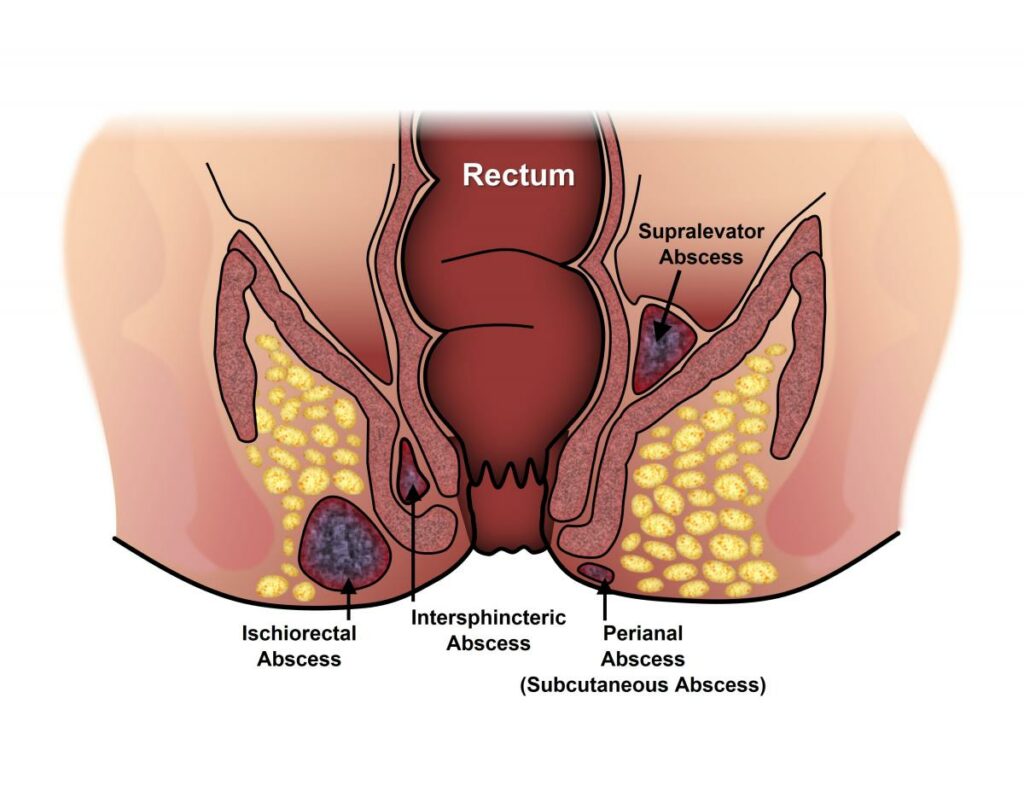
What are the Types of Anal Abscess?
-
Intersphincteric Anal Abscess:
A type of abscess formed when the abscess formed in the secretory glands fills the space between the anal muscles.
-
Perianal Abscess:
A type of abscess formed when the abscess formed moves from the anal muscles to the skin and fills the perianal space.
-
Suprasphincteric Anal Abscess:
A type of abscess formed when the abscess formed moves upwards in the opposite direction of the anus and spreads to the supralevator space.
-
Ischional Anal Abscess:
A type of abscess formed when the abscess formed passes the external anal muscle and spreads to the ischial space.
Who is at Risk for Perianal Abscess Formation?
- Inflammatory bowel disease (IBD), such as Crohn’s disease or ulcerative colitis
- Diabetes
- Diverticulitis
- HIV/AIDS
- Sexually transmitted infections (STIs)
- Pregnancy
- Smoking
- Medications that suppress the immune system, such as prednisone or chemotherapy
- Frequent diarrhea or constipation
- Inserting objects into the rectum (such as during sex)
What are the Diagnosis and Treatment Methods for Anal Abscess?
After the person sees the doctor with the symptoms of anal abscess, the doctor first listens to the patient’s story. Then, a physical examination and rectal touch are performed.
When necessary;
- Endoscopy,
- Anoscopy and
- Rectoscopy
Are performed.
In addition, the doctor may request imaging with;
- Endoanal ultrasonography, (ERUS)
- Pelvic CT or
- Pelvic MR
to clarify the diagnosis of anal abscess.
Anal Abscess Treatment
An anal abscess typically requires surgical intervention for treatment. A small incision is made on the skin above the abscess under local anesthesia, allowing for drainage of the pus.
In some cases, a drain may be inserted at the site to facilitate continuous drainage if needed. For deeper anal abscesses, general anesthesia might be administered.
The cavity left after draining the abscess generally takes around a month to naturally fill with tissue. However, approximately 30% of anal abscess cases tend to recur.
If the condition reappears or if the cavity fails to fill with tissue after drainage, it may lead to the development of an anal fistula.
What Happens If Anal Abscess Is Not Drained?
When an anal abscess is not drained, it begins to open towards the skin. Skin inflammation begins. The area expands.
Over time, a channel is formed there.
Who Has Anal Abscess?
Anal abscesses are a health problem that usually occurs in men. It is known that this condition is more common between the ages of 20-60. In addition, some factors related to the individual’s physical structure and lifestyle may increase the risk of anal abscess formation.
What Are the Complications of Anal Abscess?
If we need to list the complications caused by anal abscesses:
- Recurrent abscesses
- Infection or sepsis
- Anal fistula
- Fournier gangrene
What to Consider After Perianal Abscess Treatment?
- Cleaning the anal area should be done with utmost care.
- Consume soft, fibrous foods after surgery.
- Drink plenty of water to prevent constipation.
- Pay attention to the cleanliness of the surgical area.
- Avoid physically strenuous activities.
- Consult your doctor if you notice any complications after surgery.
- Follow your doctor’s recommendations and rest during the recovery process.
Perianal Abscess: Frequently Asked Questions
How long does it take to recover from perianal abscess surgery?
Can antibiotics cure a perianal abscess?
What is the difference between a perianal abscess and a fistula?
When should I see a doctor for anal pain?