


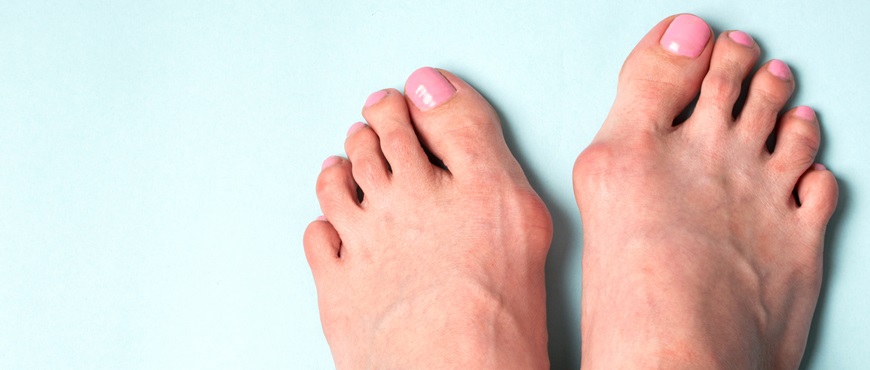
Hallux Valgus (Bunion): Causes, Symptoms, Diagnosis & Treatment
Hallux Valgus, commonly known as a bunion, is a progressive foot deformity in which the big toe (hallux) deviates toward the second toe, creating a bony prominence on the inner side of the foot. It is one of the most common forefoot deformities and can significantly affect daily life if left untreated.
Who Gets Hallux Valgus?
Hallux Valgus is more common in societies where tight or fashionable shoes are worn regularly. In populations that traditionally do not wear shoes, the condition is significantly less frequent.
High-Risk Groups:
-
Women (due to frequent use of high heels and narrow shoes)
-
Individuals with a family history of bunions
-
People with joint laxity or connective tissue weakness
-
Individuals with flat feet
The higher incidence in women is associated with:
-
Pointed, narrow footwear
-
High-heeled shoes
-
Structural ligament looseness
-
Genetic predisposition
If a close family member has Hallux Valgus, the likelihood of developing the condition increases substantially.
Causes of Hallux Valgus
Although the exact cause is not fully understood, several contributing factors have been identified:
-
Family history and hereditary factors
-
Wearing narrow or high-heeled shoes
-
Short Achilles tendon
-
Joint laxity (excessive flexibility)
-
Flatfoot or wide, flattened forefoot
-
Weak connective tissue
-
Previous foot trauma (e.g., fractures)
-
Obesity or prolonged standing
-
Rheumatoid arthritis
Hallux Valgus Symptoms
In early stages, Hallux Valgus may not cause noticeable symptoms. As the deformity progresses, symptoms become more pronounced.
Common Symptoms:
-
Visible change in foot shape
-
Bony bump on the inner side of the big toe
-
Pain around the bunion (may become inflamed)
-
Swelling and redness
-
Burning, tingling, or numbness in some cases
-
Difficulty walking as deformity progresses
-
Altered weight distribution while standing or walking
Pain is typically worse when wearing tight or high-heeled shoes.
How Is Hallux Valgus Diagnosed?
Diagnosis begins with a detailed physical examination of the foot in a non-weight-bearing position.
Diagnostic Process:
-
Clinical foot examination
-
Weight-bearing X-rays (essential for determining severity)
In most cases, further testing is not required. However, in complex or atypical cases, additional imaging such as MRI or EMG may be requested.
Hallux Valgus Treatment Options
Treatment depends on the severity of the deformity and symptom intensity.
Non-Surgical Treatment (First-Line Approach)
Surgery is not always the first choice, especially in mild cases.
Conservative Treatments Include:
-
Physiotherapy and foot exercises
-
Comfortable, wide-toe box shoes
-
Professional shoe stretching
-
Bunion pads for pain relief
-
Orthotic devices (night splints, customized insoles)
-
Anti-inflammatory medications
-
Ice therapy to reduce inflammation
-
Avoiding prolonged standing
These methods aim to relieve pain and slow progression, but they do not permanently correct the deformity.
When Is Surgery Necessary?
Surgical treatment becomes necessary when:
-
Pain persists despite conservative treatment
-
Daily activities are significantly affected
-
Deformity continues to progress
Hallux Valgus Surgery
The type of surgery depends on the severity of the deformity. Precise evaluation of weight-bearing X-rays is essential for selecting the correct procedure.
Surgical Goals:
-
Realign the big toe anatomically
-
Remove the bony prominence
-
Restore balance to bones, tendons, and ligaments
-
Prevent recurrence
During surgery:
-
Bones are repositioned
-
Tendons and ligaments are corrected
-
The bunion is removed
-
In severe cases, joint fusion may be performed
Most procedures focus on the first metatarsal joint.
Conclusion
Hallux Valgus is a progressive condition that can significantly affect quality of life if left untreated. Early diagnosis and appropriate conservative management can help control symptoms. However, in advanced cases, surgical correction provides long-term relief and anatomical restoration.